Our Featured Specials
We offer specials to help you get the service you need for a little less.
Nine common causes - and what to do about each one. Written by Donnie Ginsel, Owner & HVAC Technician (TACLA88971E).
Call 936-661-9123 Emergency ServiceYour AC is running. The blower is moving air. But the thermostat is reading 78 and your home feels hot. Where do you start? This guide walks through nine common causes for an AC that runs but does not cool a Texas home - from quick five-minute checks to system-replacement decisions - in roughly the order most homeowners should investigate them.
Before you call anyone, run through this five-minute checklist:
If steps 1 and 2 fix the problem, you are done. If not, read on.
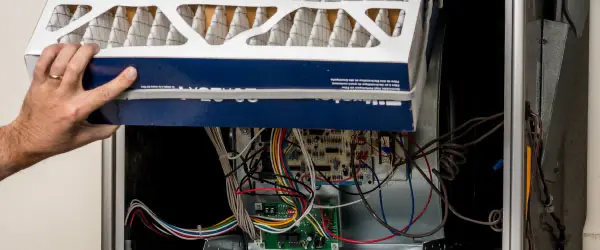
The single most common reason an AC won't cool. A dirty filter restricts airflow across the indoor evaporator coil, which forces the coil to run colder than designed, which in turn freezes the coil and shuts down cooling entirely. In a Texas summer, a neglected filter can cause this within a single day.
Fix: Replace the filter. The size is printed on the edge of the existing filter. Replace every 1-3 months during cooling season; monthly if you have pets or live in a high-pollen area.
When to call: If you just replaced the filter and cooling has not returned within a couple of hours, the coil may still be frozen (see below).
The evaporator coil is the indoor part of the system that absorbs heat from your home's air. If airflow is restricted (dirty filter, blocked vents, undersized return duct) or if refrigerant is low, the coil can freeze. Ice builds up across the fins; cooled air can't pass through; the system runs without cooling.
Symptoms: visible ice on the refrigerant line going outside, water dripping from the indoor unit (the ice eventually melts), reduced or no airflow at supply registers.
Fix: Turn the system off at the thermostat. Let it thaw for several hours. Replace the filter. Restart the system. If it freezes again within a day, the root cause is likely refrigerant-related and needs a licensed technician.
Do not: chip the ice off, or run the system with a frozen coil. Both damage the compressor.
Air conditioners do not consume refrigerant the way an engine consumes oil. The refrigerant circulates in a closed loop, indefinitely - unless there is a leak. If your system was charged correctly at installation and is now low, you have a leak somewhere in the line set, indoor coil, or outdoor coil.
Symptoms: the indoor coil freezes repeatedly, the outdoor unit runs but cooling is weak, a hissing sound at the indoor or outdoor unit, ice on the small copper refrigerant line.
Fix: A licensed technician with EPA 608 certification will pressure-test the system, find the leak, repair it, and recharge with the correct refrigerant - R-410A on older systems, R-454B on systems installed under the 2025 transition rules. R-410A is increasingly legacy stock; the cost of a recharge plus leak repair on an older R-410A system often pushes the conversation toward replacement.
Why you cannot DIY: Refrigerant handling is federally regulated. Beyond the legal issue, adding refrigerant without finding the leak just masks the problem - the system will be low again in weeks.
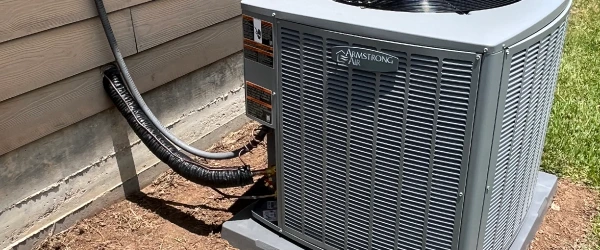
The outdoor unit's job is to dump heat into the outside air. The metal fins on the side of the outdoor cabinet are the coil; if those fins are blocked with dirt, cottonwood seeds, mowing debris, or pet hair, the system can't reject heat and cooling capacity drops fast.
Symptoms: outdoor unit running but cooling is weak; outdoor cabinet feels hotter to the touch than usual; high refrigerant pressures (something the technician will measure).
Fix: A garden hose on gentle spray, aimed straight through the fins from the inside out, removes most surface debris. Do not use a pressure washer; the fins bend easily. For deeper cleaning, the technician uses a foaming coil cleaner during a tune-up.
Prevention: Maintain at least two feet of clearance around the outdoor unit. Trim vegetation back. Don't park the lawnmower discharge chute facing the unit.
The capacitor stores the electrical jolt that gets the compressor and fan motors started. Capacitors lose strength gradually over years of summer heat and then fail. When they fail, the outdoor unit either hums but won't start, or starts and then stalls.
Symptoms: outdoor compressor humming but not spinning, fan blade not turning, a clicking sound at the contactor, breakers tripping when the AC tries to start.
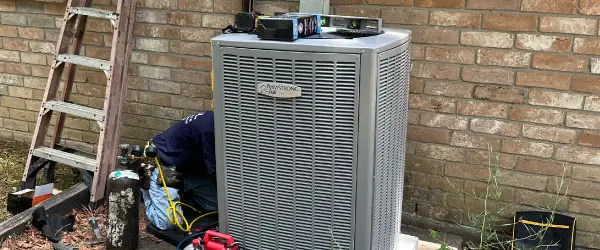
Fix: A capacitor or contactor replacement is one of the most common HVAC repairs and is usually the same-trip fix. Common capacitor sizes ride on every service truck. The technician tests microfarad capacity against the nameplate rating and replaces the part if it is out of spec.
Do not: open the outdoor disconnect and try to replace the capacitor yourself. Capacitors store residual charge that can hurt you even with the power off.
It sounds basic, but it is worth ruling out. Modern programmable and smart thermostats have multiple modes, schedules, hold settings, and remote-access overrides. A spouse, child, or remote-app schedule may have set the system to a different mode than you expect.
Check: Mode is COOL (not HEAT, OFF, or EM HEAT), fan is AUTO (not ON, which runs the blower constantly without cooling), setpoint is below current indoor temperature, schedule is not overriding your settings, batteries are fresh in battery-powered thermostats.
Smart thermostat gotchas: some smart thermostats interpret a sudden temperature swing as a sensor problem and switch off cooling temporarily. Restart the thermostat (pull it off the wall plate, wait 30 seconds, reattach) if anything seems off.
If your AC has always struggled on the hottest days, the problem may not be a failure at all. The system may be sized too small for the Texas heat. Air conditioners are sized in tons of cooling capacity; the correct size is determined by a Manual J load calculation that accounts for square footage, insulation, window area, orientation, ductwork, and local climate.
Symptoms: system runs constantly during peak afternoon heat, never reaches the setpoint on the hottest days, but works fine on cooler days; rooms farther from the air handler stay warm.
Fix: A proper Manual J load calc by a qualified contractor will tell you whether the existing system is undersized. If it is, the answer is replacement with a correctly sized system. We do this load calc on every replacement quote so the next system is sized for the home, not just matched to the old nameplate.
Most Texas homes have ductwork running through the attic. Attic temperatures in summer routinely hit 130 degrees. If the ducts leak - and most older ducts do - you are pumping expensive cooled air directly into the attic. According to the U.S. Department of Energy, typical home duct systems lose about 20 to 30 percent of air movement to leakage, holes, and poorly connected ducts.
Symptoms: uneven cooling between rooms, higher utility bills than you expect, the room farthest from the air handler is hottest, dust accumulating around supply registers.
Fix: A duct pressure test identifies the leak rate. Repair options range from sealing joints with mastic (cheapest, most effective) to replacing flex duct sections to a full duct redesign. We check duct condition as part of every system replacement quote.
Compressors are the heart of an AC system. They are designed for 12-15 cooling seasons of typical use. Texas use accelerates that timeline. An aging compressor loses pumping efficiency gradually, then either burns out or locks up. The system may still run, but it cannot move enough refrigerant to actually cool.
Symptoms: system runs constantly without cooling, outdoor unit is noticeably louder than it used to be, repair calls in the last two seasons.
Fix: Compressor replacement is one of the most expensive single HVAC repairs and is often the moment to weigh repair against full system replacement. On systems older than 12 years, replacement usually pencils out better - especially with the R-454B refrigerant transition affecting parts availability on older R-410A systems. See our AC installation page for what a replacement looks like.
If you have run through the quick checklist and the first few causes here without restoring cooling, call a licensed technician. Specific situations that should never wait:
Ginsel Heating & Air covers Huntsville, Madisonville, New Waverly, Centerville, Conroe, College Station, and Bryan. Call 936-661-9123 or see the emergency AC service page for after-hours response details.
The most common reasons are a clogged air filter, a frozen evaporator coil, low refrigerant, a dirty outdoor condenser, a failing capacitor, or a duct leak. Start with the filter and the thermostat; if those are fine, the next likely cause is refrigerant or capacitor related, and that needs a licensed technician.
Air filter first. Then the thermostat (mode COOL, setpoint below indoor temp, fan AUTO). Then the breaker. Then walk to the outdoor unit and confirm it is running and not iced over.
This is almost always a capacity problem. The system is sized close to your home's design load and cannot keep up when outdoor temperatures push above 95 degrees. Likely contributors: undersized equipment, low refrigerant, dirty condenser coil, or significant duct leakage into the attic.
No. Refrigerant handling is EPA-regulated and requires 608 certification. Adding refrigerant without finding the leak just masks the problem; you will be low again in weeks and the underlying problem keeps damaging the system.
Look for visible ice on the refrigerant line at the outdoor unit, or open the indoor air handler and inspect the evaporator coil. If either is iced over, turn the system off and let it thaw before doing anything else.
DIY-safe: changing the air filter, checking the thermostat, resetting a tripped breaker once, clearing debris from around the outdoor unit. Call a technician for: refrigerant work, electrical components, frozen coils that do not thaw out the underlying problem, repeating breaker trips, smoke or burning smell, or any system over 12 years old.
Costs vary by root cause. A new filter is the cheapest fix. A capacitor or contactor replacement is the next-cheapest. A refrigerant leak repair and recharge is mid-range. A compressor or coil replacement is the most expensive and is often the moment to weigh replacement against repair on older systems. Ginsel provides a written estimate before any repair work begins.
Longer cooling season (6+ months in East Texas), higher outdoor design temperatures, and attic-mounted ducts that hit 130+ degrees in summer - all amplify any small efficiency loss or system weakness.
We offer specials to help you get the service you need for a little less.

©Red Barn Media Group 2026